Can Modafinil Cause Conjunctivitis and Mouth Ulcers?
Modafinil and armodafinil are wakefulness-promoting medications used to treat narcolepsy, shift work sleep disorder, and obstructive sleep apnea. They are often effective, but reports of serious side effects such as conjunctivitis and mouth ulcers underscore the dangers of using them without medical supervision.

What Is Modafinil?
Modafinil is a non-amphetamine central nervous system stimulant with wakefulness-promoting properties. It is FDA-approved in the United States for:
- Narcolepsy
- Shift work sleep disorder (SWSD)
- Residual excessive sleepiness in obstructive sleep apnea (as an adjunct to CPAP therapy) (Greenblatt & Adams, 2023).
Armodafinil is the R-enantiomer of modafinil and has similar uses. Both are classified as Schedule IV controlled substances due to their potential for misuse (U.S. Food and Drug Administration [FDA], 2015).
Case Reports Linking Modafinil to Oral and Eye Reactions
Singapore Cases
The Health Sciences Authority (HSA) reported multiple hospitalizations after unprescribed modafinil or armodafinil use. Symptoms included:
- Fever and rash progressing to Stevens–Johnson syndrome
- Multiple painful mouth ulcers
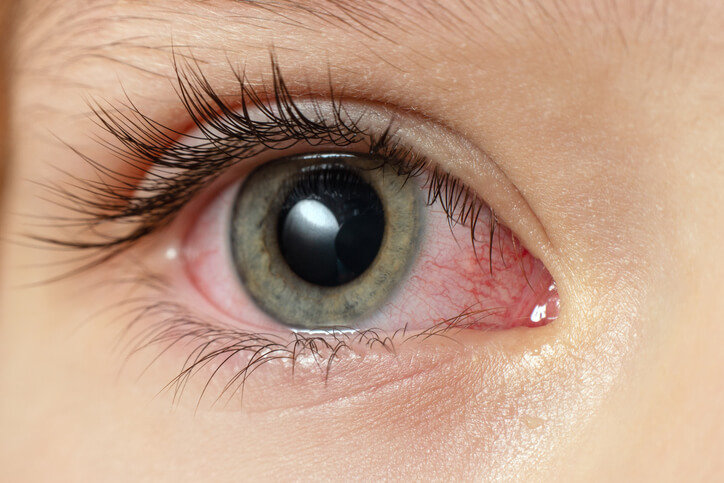
- Conjunctivitis (red, inflamed eyes)
These cases highlight the dangers of self-medicating with unregulated products.
Indian Case Reports
Two medical trainees who were taking modafinil without supervision developed fixed drug eruptions (FDE), a reaction known for producing lesions that reappear in the same mucosal area. In one case, the individual developed painful erosions in the mouth that were directly associated with modafinil use during exam preparation (Ghoshal & Sinha, 2015).
Why Do These Reactions Happen?
Mouth Ulcers
There are numerous reasons why mouth ulcers can appear, from simple trauma to nutritional gaps, autoimmune disorders, or reactions to medications (Scully & Shotts, 2000). In drug-related cases, they often occur as part of broader hypersensitivity syndromes such as FDE or SJS.
Conjunctivitis
Most conjunctivitis cases are infectious or allergic, but it is also recognized as a feature of systemic immune-mediated conditions. Reviews confirm that SJS frequently involves ocular inflammation, including conjunctivitis and corneal damage (Azari & Arabi, 2020).
Severe Immune Reactions
Modafinil and armodafinil are associated with rare but life-threatening hypersensitivity syndromes, including:
- Stevens–Johnson syndrome (SJS)
- Toxic epidermal necrolysis (TEN)
- Multiorgan hypersensitivity reactions (FDA, 2015)
In these conditions, the immune system attacks mucous membranes, explaining why conjunctivitis and mouth ulcers appear together.
Risks, Warnings, and Medical Guidance
- The FDA label for Provigil warns: “Discontinue at the first sign of rash, unless the rash is clearly not drug related” (FDA, 2015).
- Other risks include psychiatric effects (anxiety, mania, hallucinations) and cardiovascular strain (Greenblatt & Adams, 2023).
- Fixed drug eruptions, though less severe than SJS, can still cause painful and recurrent oral lesions (Ghoshal & Sinha, 2015).
Medical advice:
- Do not self-medicate with modafinil or armodafinil.
- Seek urgent care if rash, eye inflammation, or mouth ulcers appear.
- Use only under a physician’s supervision.
Conclusion
While modafinil and armodafinil are effective treatments for excessive sleepiness in conditions like narcolepsy and SWSD, they also carry risks of severe allergic reactions. Documented cases show that conjunctivitis and mouth ulcers may occur as part of drug-induced hypersensitivity syndromes. For safety, these medicines must be prescribed, monitored, and discontinued immediately at the first sign of mucocutaneous involvement.
References
- Azari, A. A., & Arabi, A. (2020). Conjunctivitis: A systematic review. Journal of Ophthalmic & Vision Research, 15(3), 372–395. https://doi.org/10.18502/jovr.v15i3.7456
- Ghoshal, L., & Sinha, M. (2015). Fixed drug eruptions with modafinil. Indian Journal of Pharmacology, 47(2), 224–226. https://doi.org/10.4103/0253-7613.153437
- Greenblatt, K., & Adams, N. (2023, February 6). Modafinil. In StatPearls [Internet]. StatPearls Publishing. https://www.ncbi.nlm.nih.gov/books/NBK531476/
- Scully, C., & Shotts, R. (2000). ABC of oral health: Mouth ulcers and other causes of orofacial soreness and pain. BMJ, 321(7254), 162–165. https://doi.org/10.1136/bmj.321.7254.162
- U.S. Food and Drug Administration. (2015). PROVIGIL® (modafinil) tablets, for oral use, C-IV [Prescribing information]. U.S. Department of Health and Human Services. https://www.accessdata.fda.gov/drugsatfda_docs/label/2015/020717s037s038lbl.pdf