Can You Take Zaleplon to Sleep After Modafinil?
Modafinil is meant to keep you awake. Zaleplon is meant to help you fall asleep. That makes zaleplon an obvious drug to wonder about if modafinil is still keeping you awake when you need to sleep.
There is some evidence connecting the two drugs, but not as much as the question might suggest. A patent application specifically describes modafinil being co-administered with sedative agents including zaleplon for sleep abnormalities. However, the available research does not include a controlled human trial showing that zaleplon reliably reverses insomnia caused by modafinil.
That leaves an important distinction: zaleplon can promote sleep while modafinil is still in the body, without switching it off.

What Is Modafinil?
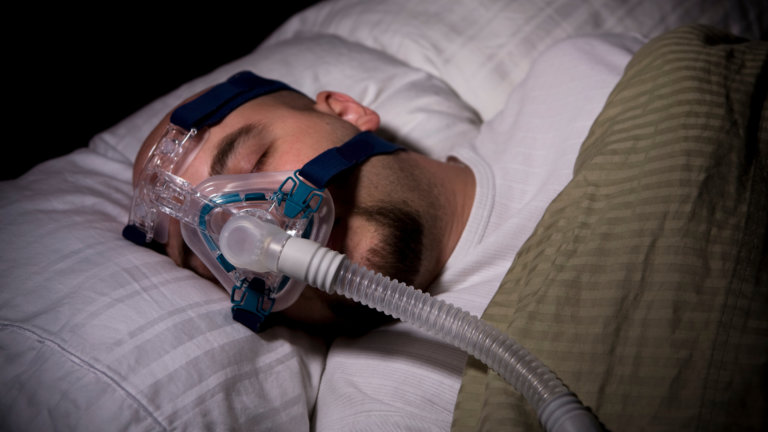
Modafinil is a non-amphetamine central nervous system stimulant with wakefulness-promoting properties. In the United States, it is used for excessive daytime sleepiness associated with narcolepsy, shift work disorder and obstructive sleep apnea.
Its mechanism is not identical to traditional stimulants such as amphetamine. Modafinil weakly inhibits dopamine reuptake, and research has also implicated orexin, histamine and other neurotransmitter systems in its wake-promoting effects.
For narcolepsy and obstructive sleep apnea, the usual dose described by StatPearls is taken in the morning. For shift work disorder, it is taken about one hour before the work shift.
Timing matters because modafinil remains in the body for considerably longer than a typical workday.
What Is Zaleplon?
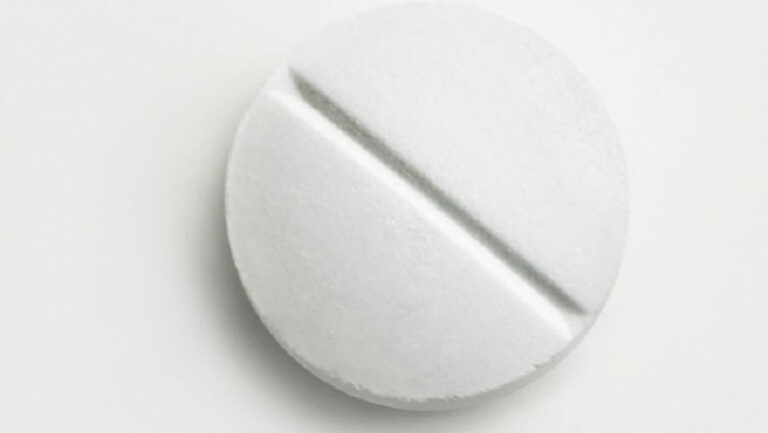
Zaleplon is a non-benzodiazepine hypnotic, commonly grouped with the medications known as Z-drugs.
It acts at the benzodiazepine type 1 site of the GABA-A receptor complex. Z-drugs enhance GABA-mediated inhibitory signalling in the central nervous system, reducing neuronal excitability.
Zaleplon’s pharmacokinetic profile is very different from modafinil’s. It acts quickly, with peak plasma concentrations at about one hour and an elimination half-life of approximately one hour. Its short duration helps explain why zaleplon is better suited to helping someone fall asleep than keeping them asleep throughout the night.
StatPearls describes zaleplon as a Schedule IV prescription medication that is taken immediately before bedtime.
Why Can Modafinil Make It Hard to Sleep?
Modafinil has an elimination half-life of approximately 15 hours in healthy subjects. That means elimination is relatively slow compared with zaleplon.
A 15-hour half-life does not mean that everyone will feel strongly stimulated for exactly 15 hours. Half-life measures how quickly the concentration of a drug declines in the body, not the precise duration of the subjective effect.
It does mean, however, that modafinil taken earlier in the day can still be present when bedtime arrives. Insomnia is also listed among its commonly reported adverse effects.
This is one reason why the recommended timing for common daytime indications is in the morning rather than close to bedtime.
Can You Take Zaleplon After Modafinil?
A 2005 U.S. patent application titled Modafinil Combination Therapy for Improving Sleep Quality describes pharmaceutical combinations involving modafinil and sedative agents, with zaleplon specifically included among the listed sedatives.
Separately, the same patent describes a specific method of co-administering modafinil and a sedative agent for a sleep abnormality, with zaleplon again included among the possible sedatives.
Elsewhere, the patent defines combination therapy broadly. It says the second therapeutic agent may be administered before, simultaneously with, or after the first agent, provided their dosing intervals or therapeutic effects overlap.
That is relevant evidence that taking a sedative while modafinil remains active is pharmacologically conceivable.
It does not, however, establish that taking zaleplon after modafinil has been proven safe or effective in clinical practice. A patent describes an invention and proposed uses. It is not equivalent to a randomised clinical trial.
None of the human studies in the supplied sources directly tested zaleplon specifically for people who remained awake because they had taken modafinil.
Will Zaleplon Cancel Out Modafinil?
Not in the sense of one drug chemically neutralising the other.
Modafinil promotes wakefulness through pathways that include dopaminergic signalling and potentially orexin and histamine systems.
Zaleplon works through GABA-A receptors, enhancing inhibitory signalling.
Taking zaleplon therefore does not mean that modafinil suddenly disappears from the body. Modafinil can remain present while zaleplon is exerting its own sleep-promoting effect.
This distinction is particularly important because modafinil’s roughly 15-hour elimination half-life is far longer than zaleplon’s roughly one-hour half-life.
The drugs can exert opposing effects on sleep and wakefulness without literally cancelling each other out.
Can Zaleplon Help You Fall Asleep While Modafinil Is Still Active?
Zaleplon can shorten sleep latency under some difficult sleeping conditions. What has not been established is how well it does so when the reason for wakefulness is specifically modafinil.
A 2016 study examined zaleplon in healthy young men who were trying to sleep during the afternoon while exposed to approximately 95 dB of noise. Eight participants took 10 mg zaleplon, 15 mg zaleplon and placebo on different occasions while their sleep was measured by polysomnography.
During these noise-exposed afternoon sleep trials, zaleplon produced significantly shorter sleep latency than placebo — 27.50 ± 10.92 minutes for placebo versus 11.19 ± 2.05 minutes for 10 mg and 5.75 ± 2.12 minutes for 15 mg — with the 15 mg condition also producing higher measured sleep efficiency than placebo and 10 mg zaleplon.
This shows that zaleplon can facilitate sleep when circumstances make falling asleep difficult.
But the study did not administer modafinil before zaleplon; volunteers were instructed to avoid psychoactive drugs before the experimental sessions.
Have Wakefulness Drugs and Sleeping Pills Been Used Around the Same Sleep-Wake Cycle?
Military aviation provides an interesting context because personnel may sometimes need to remain alert during operations and then sleep during an unusually short or inconvenient sleep window.
The 2016 zaleplon paper notes that the U.S. Air Force had approved limited use of a short-acting hypnotic to relieve sleep problems and a stimulant to enhance alertness in operational settings.
The same paper discusses earlier research in which modafinil increased a measure of vestibular activity during sleep deprivation and says the effect was maintained for one to seven hours. In its own zaleplon experiment, some vestibular measures moved in the opposite direction and returned to normal within about three hours.
The authors concluded more broadly that some military operations may require pharmacological methods both to sustain alertness and to facilitate sleep during limited sleep opportunities.
This provides real-world context for why wake-promoting and sleep-promoting medications might both be relevant to the same person’s schedule.
How Long After Modafinil Can You Take Zaleplon?
The available evidence does not provide a clinically validated waiting period.
There is no study in these sources establishing a rule such as waiting four, eight or 12 hours between modafinil and zaleplon.
The patent is notable because it explicitly allows the second agent to be administered after the first while the first agent’s therapeutic effect is still present. But that language should not be converted into a dosing recommendation.
The pharmacokinetics also make a simple cutoff difficult. Modafinil has an elimination half-life of about 15 hours, while zaleplon has one of about one hour.
There is therefore no evidence-based number in these sources that can be presented as the point at which taking zaleplon after modafinil becomes safe.
Is There a Drug Interaction Between Modafinil and Zaleplon?
The supplied sources do not establish a measured clinical interaction between these two drugs.
StatPearls describes modafinil as a moderate inducer of CYP3A4 and notes that it can reduce concentrations of some other medications.
The patent’s discussion of zaleplon states that most of its metabolism is attributed to aldehyde oxidase.
Those facts are not enough to calculate or predict how much modafinil would alter zaleplon exposure in an individual. A specific quantitative interaction should therefore not be claimed from these sources.
What Are the Risks of Taking Zaleplon?
Zaleplon may be short acting, but that does not make it free of meaningful adverse effects.
Commonly reported effects include drowsiness, dizziness, grogginess and reduced ability to concentrate. More serious reported effects include abnormal behaviour, confusion, hallucinations, memory problems and severe allergic reactions.
Z-drugs including zaleplon have also been associated with complex sleep behaviours. These can include sleepwalking, sleep-eating and sleep-driving, sometimes with no memory of the event afterward. StatPearls notes an FDA boxed warning concerning these behaviours.
Alcohol and other central nervous system depressants can increase the risk associated with zaleplon. Modafinil itself is not a CNS depressant, so that warning should not be misread as describing modafinil.
Even in the 2016 afternoon-sleep experiment, the 15 mg zaleplon condition caused significant drowsiness for up to two hours during the psychomotor and vestibular testing sessions.
What If Modafinil Regularly Keeps You Awake?
Occasional difficulty sleeping and a repeated pattern of needing another medication to fall asleep are different situations.
Modafinil is normally timed around the period in which wakefulness is wanted. For narcolepsy and obstructive sleep apnea, StatPearls describes morning dosing, while shift workers take it shortly before their work period.
If modafinil repeatedly interferes with sleep, its timing and overall treatment regimen are relevant issues to discuss with the prescriber rather than assuming that a short-acting hypnotic should routinely be added to counteract it.
Bottom Line
Zaleplon can help people fall asleep, and there is a direct documentary connection between the two drugs: a 2005 patent application specifically contemplated co-administering modafinil with sedative agents including zaleplon for sleep abnormalities. The patent also allowed the second drug to be given after the first while their effects overlapped.
What is missing is direct clinical evidence showing that zaleplon safely and reliably reverses modafinil-induced insomnia.
Human research shows that zaleplon can shorten the time needed to fall asleep, including during difficult daytime sleep conditions, but those participants had not taken modafinil.
So zaleplon should not be described as an antidote to modafinil or as a proven way to switch off its effects. The available evidence supports the possibility of overlapping use, but not a universal dosing interval or a self-directed strategy for combining the two.
FAQs
Can zaleplon cancel out modafinil?
No evidence shows that zaleplon neutralises modafinil or removes it from the body. The two drugs work through different systems: modafinil promotes wakefulness, while zaleplon enhances inhibitory GABA-A signalling to facilitate sleep.
Can you sleep while modafinil is still in your system?
Yes. The presence of modafinil in the body does not mean sleep is impossible. However, modafinil promotes wakefulness and insomnia is a recognised adverse effect, so it can make falling asleep more difficult in some people.
How long does modafinil last?
Its elimination half-life after a single dose in healthy subjects is approximately 15 hours. That figure describes drug elimination and should not be treated as an exact duration of noticeable wakefulness.
How quickly does zaleplon work?
Zaleplon has a quick onset, reaches peak plasma concentration at approximately one hour and has an elimination half-life of about one hour. Its short duration makes it primarily useful for sleep initiation rather than sleep maintenance.
Is there a recommended waiting time between modafinil and zaleplon?
The supplied evidence does not establish a specific waiting period. The patent allows overlapping effects and describes the second agent as potentially being administered after the first, but that is not a clinically validated dosing schedule.
Has modafinil been studied together with zaleplon?
The combination is specifically described in a patent application, but the supplied sources do not contain a controlled human trial testing zaleplon specifically for insomnia caused by modafinil.
References
Bhandari, P., & Sapra, A. (2023). Zaleplon. In StatPearls. StatPearls Publishing. https://www.ncbi.nlm.nih.gov/books/NBK551571/
Chen, L.-E., Zhao, A.-D., Zhang, Q.-J., Wu, F., Ge, Z.-L., Ge, H., & Zhan, H. (2016). Investigation of the usefulness of zaleplon at two doses to induce afternoon-sleep under noise interference and its effects on psychomotor performance and vestibular function. Military Medical Research, 3, Article 5. https://doi.org/10.1186/s40779-016-0075-4
Greenblatt, K., & Adams, N. (2023). Modafinil. In StatPearls. StatPearls Publishing. https://www.ncbi.nlm.nih.gov/books/NBK531476/
Lalji, K., & Barberich, T. J. (2005). Modafinil combination therapy for improving sleep quality (U.S. Patent Application Publication No. US 2005/0215521 A1). United States Patent and Trademark Office.