Can Modafinil Cause Blurry Vision?
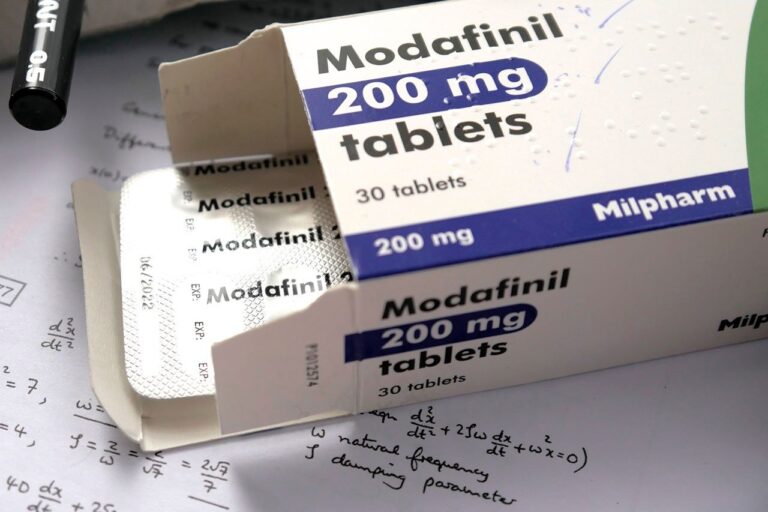
Blurry vision is not the first side effect most people associate with modafinil. Headache, nausea, anxiety, insomnia, dizziness, and appetite changes usually come up sooner. Still, vision changes are part of the safety record. The FDA prescribing information for Provigil lists “abnormal vision” in 1% of treated patients versus 0% of placebo-treated patients, and Drugs.com lists blurred vision among ocular side effects (U.S. Food and Drug Administration, 2015; Drugs.com, 2026).

Blurry Vision Is Documented, but Not One of the Main Side Effects
The Provigil label does not place vision problems among the most common adverse reactions. In pooled placebo-controlled trials, the most common reactions were headache, nausea, nervousness, rhinitis, diarrhea, back pain, anxiety, insomnia, dizziness, and dyspepsia (U.S. Food and Drug Administration, 2015). Vision changes appear lower down the adverse-reaction table.
“Abnormal vision” is not identical to “blurred vision” — it may include several kinds of visual disturbance. Drugs.com lists blurred vision under ocular side effects in the “common” frequency category, while dry eye is listed as uncommon (Drugs.com, 2026). Taken together, the sources support a basic point: blurry or altered vision can occur with modafinil.
Why Vision Might Feel Blurry on Modafinil
Blurry vision does not always mean the eye itself has been damaged. Often it means the visual system is struggling to focus clearly or maintain comfort.
Modafinil is a wakefulness-promoting central nervous system drug approved for excessive sleepiness linked with narcolepsy, obstructive sleep apnea, and shift work disorder. Its exact wake-promoting mechanism is not fully understood, but it is known to affect dopamine reuptake and may also involve orexin, histamine, and glutamate pathways (Greenblatt & Adams, 2023).
Some people may experience a direct medication side effect. Others may notice blurry vision because modafinil changes the conditions around their eyes: longer screen sessions, fewer breaks, less blinking, dry eyes, reduced food or water intake, or working through fatigue that would normally force rest. Dry eye is especially plausible when the symptom feels like strain, burning, fluctuating focus, or vision that clears briefly after blinking.
Dose may also matter. The recommended Provigil dose for narcolepsy and obstructive sleep apnea is 200 mg once daily in the morning; for shift work disorder, 200 mg about one hour before the work shift. Doses up to 400 mg per day have been tolerated but do not show consistent added benefit beyond 200 mg (U.S. Food and Drug Administration, 2015). Many informal reports of blurry vision involve higher doses, accidental double dosing, or people describing the medication as too strong.
What Users Report Online
Reddit reports tend to cluster around three situations: starting modafinil, taking higher doses, and dealing with dry or strained eyes.
Some users describe blurry vision soon after starting modafinil. One narcolepsy user noticed blurred vision after about a week on 200 mg. Replies were cautious: vision changes can happen, but a doctor should be involved if the symptom is new or worrying.
Other users describe blurry vision at higher doses. One reported strained, blurry vision after taking 300 mg. Another accidentally took 400 mg and found it harder to focus on distant objects. Commenters mentioned dry eyes, hydration, eye drops, and rest.
The narcolepsy discussions add a complication. One commenter said their blurry vision appeared when they were extremely tired or close to a sleep attack, their eyes seemingly unable to hold focus during severe fatigue. Many people who take modafinil already have sleep disorders. Narcolepsy, obstructive sleep apnea, shift work, and chronic fatigue can all affect visual comfort, and a symptom that appears during modafinil treatment may still have more than one contributor.
These are self-reports, often mixed with high doses, poor sleep, long screen sessions, dehydration, anxiety, or other medications. They show what blurry vision on modafinil can feel like in real life, not what causes it.
Is It the Medication or Something Else?
Blurry vision is common outside modafinil use. Dry eyes, uncorrected vision, contact lenses, allergies, migraine, blood sugar changes, blood pressure changes, sleep loss, and long hours on screens can all produce it.
The pattern becomes more suspicious when blurry vision starts soon after beginning modafinil, appears after each dose, worsens at higher doses, fades as the drug wears off, or returns after taking it again. Even then, that pattern is not a diagnosis. It is a reason to discuss the symptom with a clinician, especially if the change is new, persistent, worsening, or interfering with driving or work.
When Blurry Vision Needs Urgent Attention
Some vision changes should not be treated as a routine side effect.
Seek urgent medical help if blurry vision is sudden, severe, one-sided, or comes with eye pain, double vision, loss of vision, flashing lights, severe headache, fainting, weakness, confusion, chest pain, shortness of breath, rash, swelling, fever, mouth sores, or trouble breathing.
Provigil carries warnings for serious rash, allergic reactions, multi-organ hypersensitivity reactions, psychiatric symptoms, and cardiovascular symptoms (U.S. Food and Drug Administration, 2015). Vision changes alongside those symptoms deserve more caution than mild, temporary eye strain. The label also advises caution with driving and hazardous activities until a person knows how Provigil affects them, and blurry vision makes that warning more relevant.
What to Track Before Speaking With a Doctor
Write down the dose, the time it was taken, when the blurry vision started, how long it lasted, and whether it happened near the strongest part of the dose. Also note sleep, screen time, caffeine, food, hydration, eye dryness, redness, headache, dizziness, contact lenses, and other medications.
Modafinil usually reaches peak blood concentration within about 2 to 4 hours and has an effective elimination half-life of about 15 hours (Greenblatt & Adams, 2023). Symptoms that repeatedly appear in the same window after dosing are easier to interpret than vague, occasional blur. A prescriber may want to review dose, timing, other medications, blood pressure, sleep quality, and whether an eye exam is needed.
Can Modafinil Damage Your Eyes?
The sources reviewed here support blurry vision and abnormal vision as possible side effects. They do not show that typical modafinil use commonly causes permanent eye damage. Most reports describe temporary blurriness, eye strain, dry eyes, or focusing difficulty, which is different from sudden vision loss, severe eye pain, or neurological symptoms. New, severe, or persistent vision changes need medical evaluation.
Blurry vision is a recognised possible side effect of modafinil, but it is not always easy to separate the drug from everything around it: dose, sleep loss, screen time, dry eyes, migraine, contact lenses, and other medications. The stronger the timing pattern, the more seriously modafinil should be considered as a contributor. The safer move is not to guess, but to document the pattern and raise it with the prescriber.
References
Drugs.com. (2026). Modafinil side effects. Drugs.com.
Greenblatt, K., & Adams, N. (2023). Modafinil. StatPearls. StatPearls Publishing.
U.S. Food and Drug Administration. (2015). Provigil (modafinil) tablets prescribing information.