Why Do Some Modafinil Users Report Hair Loss?
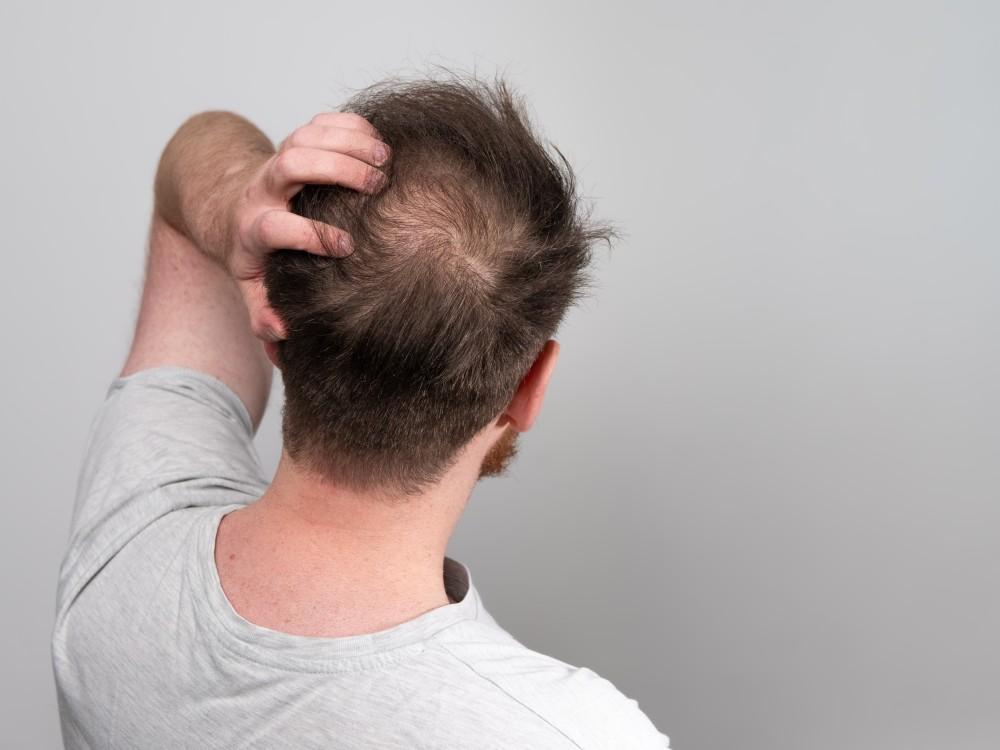
More hair in the shower than usual. More on the pillow. A temple that looks different under the bathroom mirror than it did a few months ago. Then the thought: when did I start the modafinil?
Search it and you will find other people asking the same thing. Similar timelines, similar details — temples, shedding, changes that seemed to slow after stopping and return after restarting. Enough of a pattern that the question keeps circulating even though hair loss does not appear anywhere in modafinil’s formal side-effect profile.
That gap is what makes this hard to think about clearly.

What the clinical record actually says
Modafinil has a real safety record. It has been approved for narcolepsy, shift work sleep disorder, and obstructive sleep apnea for years, prescribed widely, and monitored through postmarketing surveillance. StatPearls lists its common adverse effects as headache, nausea, decreased appetite, anxiety, insomnia, dizziness, diarrhea, and rhinitis. Rare but serious skin reactions get a mention too.
Hair loss is not on that list.
That is not a minor omission. If significant numbers of people were losing hair from modafinil, the signal would likely have shown up somewhere in the clinical literature by now. It has not — at least not in any formal, documented way.
But “not established” is genuinely different from “impossible,” and treating those as the same thing is how people end up either panicking or dismissing something real.
Why the reports keep coming up anyway
The ones worth paying attention to are not just “I started modafinil and my hair changed.” They are more specific than that. People describe a particular timeline — regular use for weeks or months, then noticeable shedding. Some describe the same temple recession. Some say the shedding calmed after they stopped, then returned when they restarted.
That stop-start detail is hard to wave away. It is the kind of observation that sticks in memory differently than a one-time correlation.
The complicating factor is that hair is a genuinely terrible thing to trace back to a single cause. Stress-related shedding often shows up weeks after the actual trigger, by which point something else has started that looks more convenient to blame. Androgenetic alopecia can quietly progress for years before a person notices it one morning and starts scanning their recent history. The thing they land on is rarely the thing that started it.
None of that makes the reports wrong. Real life is usually messier than that.
The context matters more than people give it credit for
People do not take modafinil during the easy parts of life.
They take it during exam weeks, night shifts, stretches of work where sleep is the first thing sacrificed. Some are already exhausted when they start. The drug makes it easier to stay awake longer, which for plenty of users means they simply sleep less. Appetite suppression — a recognized modafinil effect — tends to creep up slowly, especially when someone is already too busy to notice they have barely eaten.
Chronic poor sleep, sustained stress, under-eating, sympathetic nervous system overdrive — these are not neutral conditions. Hair follicles are sensitive to that kind of strain in ways that are not always obvious while it is happening.
This is not a direct line from modafinil to follicle damage. But it describes exactly the kind of background against which hair changes become more likely — and against which a drug that happened to be present gets blamed.
What the sleep research adds
A 2022 study in Sleep and Breathing found associations between severe androgenetic alopecia and short sleep duration, poor sleep quality, and elevated obstructive sleep apnea risk. The proposed mechanisms included oxidative stress, inflammation, sympathetic activation, and disruption of normal hair cycling.
The study had nothing to do with modafinil. It does not connect the drug to hair loss.
What it does suggest is that the sleep disruption modafinil can cause — particularly in people already running on too little of it — may matter more for hair health than most online discussions acknowledge. If someone has been sleeping five hours a night for months, skipping meals, and running on cortisol, isolating the drug as the single variable becomes an increasingly shaky exercise.
Not all hair changes are the same thing
Online discussions tend to treat all of these as the same thing.
Telogen effluvium is temporary. Physical or psychological stress pushes follicles into the resting phase early; shedding follows weeks later and can look alarming. But the follicles are not destroyed. When the stressor passes, the shedding typically does too.
Androgenetic alopecia is different — genetic, hormonal, progressive. It does not reverse when a stressor is removed. It often accelerates during periods of physiological strain, which is why it tends to get attributed to whatever was happening when someone finally noticed it under harsh light.
Breakage is something else again — brittle, fragile hair that splits or snaps rather than falling from the root. Changes in sleep, nutrition, or hormonal environment can affect texture without anything happening at the follicle level.
When someone says modafinil caused their hair loss, they could mean any of these. The experiences are real. But they are not the same experience, and they probably do not share the same explanation.
On the histamine theory
It comes up constantly. Modafinil interacts with orexin and histamine-related wakefulness pathways, and from there the reasoning jumps: histaminergic activity could affect follicles, therefore modafinil could cause hair loss through this pathway.
The jump is larger than it sounds. Interacting with a system is not the same as causing a specific downstream effect through that system — especially one that has not appeared in clinical trials or postmarketing surveillance. The theory is plausible enough to repeat, but it is still speculation, and most online discussions treat it with more confidence than the evidence supports.
There may be a simpler explanation: modafinil disrupts sleep in some users, suppresses appetite, and is routinely used during periods of sustained stress. Those factors affect hair. The drug does not need to act directly on follicles for that picture to be real.
Where that actually leaves things
The clinical evidence does not establish modafinil as a cause of hair loss. That matters and should not be glossed over.
But the anecdotal pattern is consistent enough — in timing, in the type of changes described, in what happens when people stop — that dismissing it entirely would be its own kind of distortion. These are not random reports. They keep finding each other because they keep resembling each other.
For some people, the overlap is probably coincidental: modafinil arrived during a stressful period, and something already underway became noticeable. For others, the indirect effects — disrupted sleep, appetite suppression, prolonged physiological strain — may genuinely be contributing. In some cases, pre-existing androgenetic alopecia was already moving in the background, and the modafinil period just happened to be when it finally became noticeable.
The evidence still does not produce a clean answer. Several things may be contributing, none of them proven, and the formal record has not confirmed what many users believe they experienced. That is an uncomfortable place, but it is the accurate one.