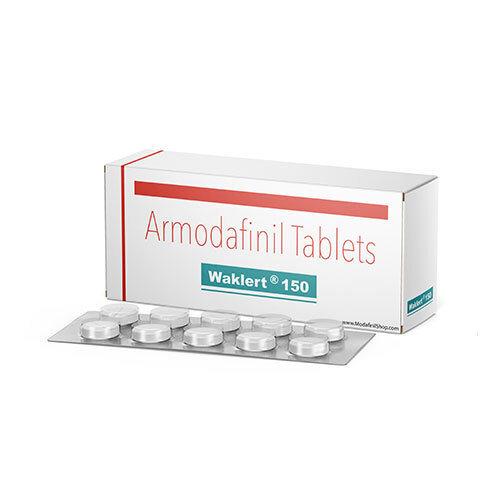
What Modafinil Abuse Actually Looks Like: It’s Not What Most People Expect
Modafinil abuse rarely looks like someone spiraling, partying, or chasing a high. It more often looks like someone who still shows up, still works, still trains, still pays the bills, and quietly shifts from using a tool to needing it.
That is the trap: it can feel responsible right up until it starts costing you.
>> Looking to Buy Modafinil Online? Get it here for less than $1 per pill!
What is modafinil?
Modafinil is a wakefulness-promoting medication approved by the FDA for treating narcolepsy, shift work sleep disorder, and excessive sleepiness related to obstructive sleep apnea. The medication affects brain chemistry to promote alertness and reduce the tendency to fall asleep during the day.
Unlike traditional stimulants such as amphetamines, modafinil has a different pharmacological profile. It doesn’t produce the same pronounced euphoria or “rush” that characterizes many other stimulants. This difference contributes to its reputation as a “cleaner” or “safer” option.
However, this reputation can be misleading. A lower potential for certain types of abuse doesn’t mean no potential for problematic use. Understanding what modafinil misuse actually looks like is important for anyone using or considering this medication.
The stereotype that keeps people in denial
When people hear “abuse,” they picture obvious chaos: huge doses taken for euphoria, reckless combinations, a dramatic crash, and a life that visibly falls apart. They imagine someone who can’t hold down a job, whose relationships crumble, who looks obviously unwell.
Modafinil usually doesn’t announce itself that way. For many people, the danger isn’t a single wild decision. It’s a slow drift into patterns that feel logical at every step. You’re still productive, maybe more productive than ever. You’re responsible. You show up. You deliver.
This makes it much harder to recognize when use has become problematic. Traditional warning signs don’t apply, so people continue patterns that are quietly harmful, genuinely believing they have things under control.

The real pattern: it starts as optimization
Most misuse begins with a simple, reasonable-sounding aim: stay awake when you need to, focus longer during important projects, work more efficiently, train harder, or manage your schedule better. Early experiences can reinforce the idea that this is a clean, controllable upgrade to your daily performance.
You’re solving a problem. You have excessive sleepiness, or demanding deadlines, or a schedule that requires extraordinary alertness. Modafinil helps. It works. You feel more capable.
Then, gradually, the goalposts move.
You’re not chasing a buzz or trying to get high. You’re chasing the old version of “working,” the version where modafinil still delivered that clear sense of enhanced function. The problem is that your baseline has shifted without you fully noticing.
What abuse actually looks like day to day
Understanding the everyday patterns of modafinil misuse is crucial because they don’t match conventional ideas about drug abuse. Here’s what to watch for:
The dose creeps up, and it feels justified
A common turning point is when the original dose stops delivering the same effect. This is tolerance, your body adapting to the medication so that the same amount produces less of an effect. Instead of asking whether the relationship with the medication has changed, or whether something else might be going on, people adjust the number upward.
It can sound like:
- “I just need a bit more today, I have an important presentation.”
- “I have a deadline and I need to be at my best.”
- “I barely felt it today, so I took another half tablet.”
- “I used to get more out of 100mg, now I need 200mg.”
- “Everyone’s tolerance is different, I must just need a higher dose.”
This is where misuse becomes normalized. Not because someone is being irresponsible or reckless, but because each increase feels like restoring a baseline that’s slipping away. Each adjustment seems reasonable in isolation.
Over time, what started as 100mg might become 200mg, then 300mg, then 400mg or more. At each step, the justification makes sense. But the overall pattern reveals increasing tolerance and escalating use.
Same-day redosing becomes routine
One of the clearest red flags is taking another dose a few hours later because the first one didn’t hit the way you wanted, or because you feel yourself sliding into fatigue mid-afternoon.
Redosing can create a loop where you’re managing the medication’s ups and downs all day, rather than using it once and moving on. You might take your morning dose, feel it wearing off around 2 p.m., and take another dose to maintain your productivity through the evening.
Over time, the day starts to revolve around medication timing rather than actual work output. You’re constantly thinking about when you took your last dose, when you need your next dose, and how to time it around sleep. The medication that was supposed to simplify your life becomes something you have to carefully orchestrate.
You feel stimulated, but not meaningfully productive
This is the productivity paradox. You can feel awake, driven, and mentally “on,” while your actual output quietly degrades.
Instead of deep work on important projects, you may find yourself:
- Stuck reading articles, scrolling forums, or endlessly researching optimal productivity techniques
- Obsessing over tools, apps, workflow systems, or life optimization
- Making elaborate plans and lists you don’t execute
- Reorganizing files, cleaning your workspace, or doing other pseudo-productive tasks
- Feeling busy and stimulated without feeling accomplished
More stimulation doesn’t automatically create better work. It often just creates more activity, more mental noise, and more of a feeling of being productive without the actual substance of productivity.
This gap between feeling productive and being productive is one of the most insidious aspects of modafinil misuse. Because you feel alert and engaged, it’s easy to believe you’re doing well, even when your actual output or quality of work has declined.
You keep taking it even when it stops delivering
Another hallmark of abuse is continuation despite diminishing returns.
At this stage, the internal story often shifts from “this makes me better” to “I can’t afford to be without it,” even if you privately admit it’s no longer producing the sharp focus or enhanced capability you remember from early use.
You might notice that:
- Tasks take longer than they used to, even on modafinil
- The mental clarity you valued has become harder to achieve
- You feel stimulated but scattered rather than focused
- You’re working more hours but accomplishing less
Despite these observations, you continue taking it. The thought of stopping feels impossible, not because you’re seeking a high, but because you’ve come to believe you can’t function without it.
It becomes about control, not focus
Modafinil misuse often attaches itself to areas that feel emotionally loaded, areas where losing control feels particularly frightening.
Common examples include:
Appetite and weight: Using modafinil primarily for appetite suppression, fearing weight gain if you stop, or avoiding the “rebound” hunger you’ve experienced when missing doses. Food intake becomes rigidly controlled by medication timing rather than actual hunger.
Training and performance: Fearing weaker workouts or lost discipline if you don’t take it before the gym. Feeling unable to maintain your exercise routine without chemical support. Believing your athletic identity depends on the medication.
Self-image: Needing to feel sharp, driven, ahead of others, or more capable than you “naturally” are. Using modafinil to maintain an image of yourself that feels threatened without it.
Routine stability: Using it to keep life feeling structured and under control. Fearing the chaos or collapse you imagine would happen if you stopped.
When a medication becomes part of how you manage fear or maintain your sense of identity, it stops being just a wakefulness tool. It becomes psychologically essential, even when the practical benefits have diminished.
Your life still functions, but it narrows
Many people miss recognizing problematic use because they’re still functioning. They’re meeting their obligations, performing at work, maintaining their responsibilities. From the outside, everything looks fine.
But functioning can come with quiet losses that are harder to see:
- A shrinking social life because you’re always working or recovering
- Constant mental calculation about sleep, timing, and recovery
- Irritability when the day doesn’t go “to plan” or when something disrupts your medication schedule
- Reduced spontaneity because your energy feels chemically scheduled
- Declining flexibility in how you spend your time
- Relationships that become more superficial or strained
Abuse doesn’t require a dramatic collapse. Sometimes it looks like a life that slowly becomes less flexible, less social, less spontaneous, and more brittle. You’re still successful by external measures, but the texture of your daily experience has changed in ways that are harder to quantify.
Why people don’t call it abuse
Modafinil has a reputation for being “safer” than traditional stimulants. That reputation isn’t invented. Research shows that modafinil has a lower abuse potential than amphetamines. Many people don’t experience the classic stimulant euphoria that drives compulsive use of other drugs. Many can use it appropriately without developing problems.
But “lower risk” is not “no risk.”
A medication can have a relatively low tendency to create a euphoric rush and still be misused in ways that shape behavior, distort judgment, and create psychological dependence. The absence of obvious intoxication or euphoria doesn’t mean the use pattern is healthy.
If you keep increasing your dose, keep redosing throughout the day, or keep using it despite clear costs to your sleep, health, or relationships, that pattern deserves attention. The label “abuse” isn’t a moral judgment about your character. It’s a description of a pattern that’s causing harm.
The line is not a number, it’s a behavior
People often ask, “What dose counts as abuse? At what point does use become misuse?”
Dose matters, but behavior matters more. Someone taking 400mg occasionally for a legitimate medical need under doctor supervision isn’t necessarily abusing the medication. Someone taking 100mg daily but exhibiting multiple problematic patterns might be.
The clearest warning signs are pattern-based:
- Escalating dose because the old dose no longer produces the desired effect
- Redosing on the same day to chase a specific feeling or keep your day functioning
- Continuing use despite reduced benefit or clear negative consequences
- Using it to manage fear, appetite, mood, or maintain your identity
- Losing parts of your life (time with others, flexibility, spontaneity) while telling yourself you’re doing fine
- Feeling unable to function normally without it
- Organizing your life around medication timing
- Experiencing significant distress at the thought of not having access to it
If you recognize yourself in several of these patterns, it’s worth taking seriously. This isn’t about shame or moral failure. It’s about recognizing that your relationship with the medication has changed.
Why stopping can feel worse than expected
When modafinil has become tied to multiple roles (focus, appetite control, training performance, emotional steadiness), stopping can feel like losing several supports at once.
What people often experience isn’t a dramatic physical withdrawal with severe symptoms. Modafinil doesn’t typically cause the kind of physical withdrawal seen with alcohol or benzodiazepines. Instead, what happens is more subtle but still profoundly uncomfortable.
Common experiences when stopping include:
- A blunt return of sleepiness, often feeling more intense than before you started
- Low drive and motivation
- Low mood or mild depression
- A sense that daily life feels heavier and harder than it should
- Difficulty concentrating
- Increased appetite, sometimes feeling out of control
- General fatigue that persists for days or weeks
That discomfort can trigger the most convincing rationalization of all: “I can’t stop right now. This isn’t a good time. Maybe later when things settle down.”
Not because you’re weak or lacking willpower, but because you’ve built a life and identity that assumes chemical momentum. Your daily functioning has come to depend on the medication in ways you might not have fully recognized until you tried to stop.
Abuse vs. dependence vs. tolerance: in plain language
These terms are often used interchangeably, but they describe different aspects of problematic medication use:
Tolerance
Your body adapts to the medication. You need more to get the same effect, or the effect feels less consistent over time. Tolerance is a physical phenomenon that can happen even with appropriate medical use.
Dependence
You feel you need the medication to function normally, even if you’re not seeking a high or euphoric effect. Your body and mind have adapted to having the medication present, and its absence causes discomfort. This can be physical dependence, psychological dependence, or both.
Abuse
You continue using in a way that causes harm or clear costs, and the pattern persists anyway. Abuse involves continuing use despite negative consequences, using more than prescribed or intended, or using in situations where it’s clearly problematic.
These terms overlap, and someone can experience all three simultaneously. But the practical point is simple: if the pattern is tightening, if the costs are rising, and if you keep moving the goalposts for what counts as “appropriate use,” then your relationship with the medication is no longer neutral.
What recognizing the pattern makes possible
If you’re reading this with a knot in your stomach, with a growing sense of recognition, that doesn’t mean you’re doomed or that you’ve failed. It means you’re paying attention. That awareness is the first and most important step.
Modafinil abuse doesn’t have to look like chaos. It can look like discipline, ambition, productivity, and “getting things done,” until you realize the medication is no longer supporting your life. It’s quietly organizing it, narrowing it, and making you less flexible and more brittle in ways you didn’t fully see.
The most important shift isn’t shame. It’s clarity.
Clarity lets you ask better questions:
- Am I using this to enhance my life, or to avoid falling apart?
- Is this improving my life, or narrowing it?
- Am I protecting my performance, or protecting myself from fear?
- What parts of my life have I lost or minimized since I started using this regularly?
- What would happen if I stopped? What does my answer to that question tell me?
When abuse is subtle and high-functioning, the first real win is simply seeing it for what it is. Once you see the pattern clearly, you can start making different choices.
The bottom line
Modafinil abuse often doesn’t look like traditional substance abuse. There’s rarely obvious intoxication, social collapse, or dramatic health crises. Instead, it tends to look like someone who’s highly functional, perhaps even more productive than average, but who has quietly become dependent on the medication to maintain that function.
The warning signs are behavioral rather than dose-based. They include escalating doses, same-day redosing, continuing use despite diminishing benefits, using the medication to manage emotional states rather than just wakefulness, and experiencing a gradual narrowing of life even while maintaining external responsibilities.
The reputation of modafinil as “safer” than traditional stimulants is partially deserved, it does have lower abuse potential than amphetamines. But this reputation can create blind spots. People continue problematic patterns because they don’t fit the stereotype of drug abuse, even as those patterns cause real harm.
Recognition is the first step toward change. If you see yourself in these patterns, you’re not weak or failing. You’re recognizing something important about how your relationship with this medication has evolved. That recognition makes different choices possible.
Professional help from a doctor or addiction specialist can provide support for reducing use or stopping safely, addressing the underlying issues that led to dependence, and rebuilding the capacities that have come to feel impossible without chemical support.
If you’re concerned about your medication use, speak with a healthcare provider. Substance use disorders are medical conditions that respond to treatment. Seeking help is a sign of strength, not weakness.
References
- Greenblatt, K., & Adams, N. (2023). Modafinil. StatPearls Publishing. NCBI Bookshelf. https://www.ncbi.nlm.nih.gov/books/NBK531476/
- McClellan, K. J., & Spencer, C. M. (1998). Modafinil: A review of its pharmacology and clinical efficacy in the management of narcolepsy. CNS Drugs, 9(4), 311–324. https://doi.org/10.2165/00023210-199809040-00006