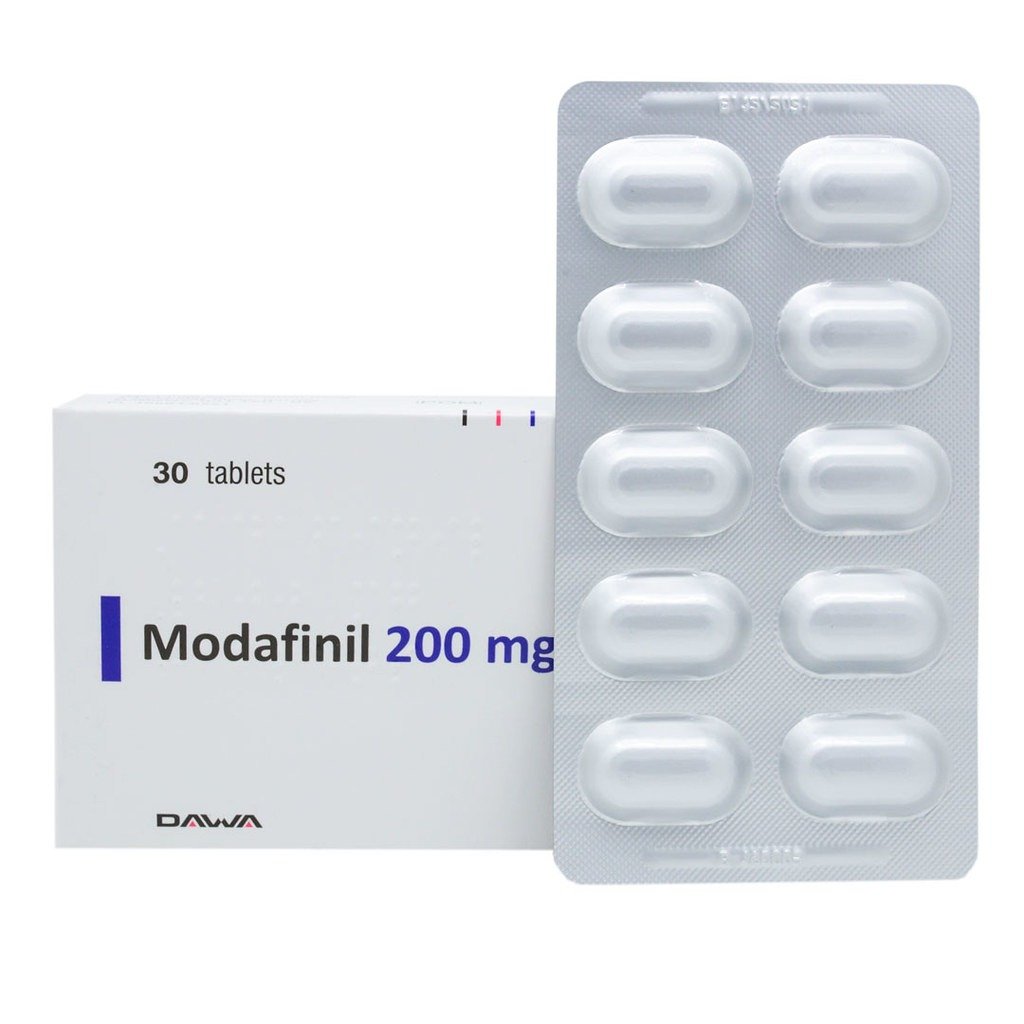
Do You Need to Cycle Modafinil? A Review of Long-Term Tolerance Data
Most people who take modafinil daily do not need to cycle it to prevent tolerance. Long-term clinical observation shows that doses tend to stabilize after initial titration and do not drift upward over time. Approved prescribing guidance does not recommend scheduled drug holidays, and the drug’s pharmacology differs enough from classical stimulants that the cycling logic borrowed from amphetamine use does not automatically apply.

Tolerance: What the Long-Term Data Actually Show
The practical case for cycling modafinil rests on one assumption: that continuous use leads to escalating doses. That assumption is not supported by long-term clinical observation.
In a large outpatient psychiatric practice, 105 patients remained on modafinil for two months or longer, with some continuing for more than four years. The longest documented continuous use in that cohort was 55 months. Across that period, doses stabilized after the first ten months of use, and no patient showed a pattern of progressive escalation to maintain effect. Patients who had a prior history of substance abuse ended up on final doses statistically similar to those with no such history, averaging around 290 mg per day versus 258 mg per day, a difference that was not clinically significant.
Only 15 percent of patients required any dose adjustment at all in the early months, and none required adjustments after that initial period.
The Withdrawal Question
A second reason people cycle stimulants is to prevent physiological dependence. Here, modafinil’s profile is also distinct from traditional stimulants.
In a placebo-controlled trial, patients who stopped modafinil after nine weeks of continuous use were observed for 14 days. No withdrawal syndrome emerged. Patients with narcolepsy experienced a return of baseline sleepiness, which reflects the drug’s absence rather than a rebound state. That distinction matters. Loss of a drug’s effect when it is stopped is not the same as withdrawal.
Modafinil carries a Schedule IV classification in the United States, which reflects regulatory acknowledgment of some misuse potential. The prescribing label notes that the drug produces psychoactive and euphoric effects and has been shown to be reinforcing in animal models. Those findings support monitoring in high-risk populations. They do not translate into a clinical recommendation for cycling in otherwise stable patients.
Why Modafinil’s Mechanism Matters Here
Modafinil’s low tolerance signal is consistent with how it works at the neurochemical level.
Classical stimulants such as amphetamine cause direct dopamine release and produce strong activation throughout the brain. Modafinil inhibits dopamine reuptake only weakly, at roughly one-hundredth the potency of methylphenidate at the dopamine transporter. Its wakefulness-promoting effects involve orexin neurons, histamine pathways, and indirect effects on norepinephrine and serotonin, rather than direct dopamine flooding.
In animal studies, modafinil produced more consolidated and selective neuronal activation than amphetamine. In human EEG studies, it increased alpha power and decreased theta power, consistent with improved neural efficiency rather than broad stimulation. Its subjective effects are generally rated as less euphoric than amphetamine or methylphenidate, which is part of why its abuse liability is considered lower.
This pharmacological profile is consistent with the relatively low signal for tolerance observed in long-term clinical data.
One Metabolic Consideration Worth Knowing
At doses of 400 mg per day taken over extended periods, modafinil induces its own metabolism through CYP3A4, the liver enzyme responsible for breaking it down. This means the body gradually clears the drug more efficiently at higher doses, which can produce modest decreases in circulating drug levels over time.
The prescribing label notes this effect but characterizes its clinical significance as minimal, citing the inconsistency of its occurrence and the small magnitude of the changes observed. It does not translate into a recommendation to cycle the drug. At the standard 200 mg daily dose, this effect is less pronounced.
This is the clearest pharmacokinetic argument sometimes raised in favor of cycling, and regulators have not acted on it as a clinical concern.
What Regulators Recommend
Approved prescribing guidance for modafinil describes it as a once-daily medication. The standard adult dose is 200 mg taken each morning for narcolepsy or obstructive sleep apnea, or approximately one hour before a work shift for shift work disorder. Doses up to 400 mg daily have been used and tolerated, though consistent additional benefit over 200 mg has not been established.
Dose reduction is recommended in patients with severe hepatic impairment, where clearance is reduced by approximately 60 percent. Lower doses and closer monitoring are advised in elderly patients. No dose adjustments for tolerance prevention are described.
When Cycling Is a Personal Decision
Some people choose to use modafinil on certain days only, reserving it for high-demand periods or limiting total weekly exposure by preference. That is a reasonable personal strategy and not medically prohibited.
What is not established is that this approach is necessary to preserve the drug’s long-term effectiveness. No randomized trials have directly compared continuous daily use against structured cycling protocols over extended periods. The long-term observational data that exist show stable effects with continuous use, but they do not rule out individual variation.
If cycling is something you are considering, that is a conversation for a prescribing physician rather than a self-directed protocol.
The Short Answer
Cycling modafinil is not a medically recommended practice, and the available long-term evidence does not show that continuous daily use leads to tolerance-driven dose escalation in most patients. The drug’s mechanism differs from classical stimulants in ways that are consistent with that clinical picture. Cycling remains a personal choice, not a clinical requirement.
Sources
- Greenblatt, K., & Adams, N. (2023). Modafinil. In StatPearls. StatPearls Publishing. https://www.ncbi.nlm.nih.gov/books/NBK531476/
- Gerrard, P., & Malcolm, R. (2007). Mechanisms of modafinil: A review of current research. Neuropsychiatric Disease and Treatment, 3(3), 349–364. https://www.ncbi.nlm.nih.gov/pmc/articles/PMC2654794/
- Nasr, S., Wendt, B., & Steiner, K. (2006). Absence of mood switch with and tolerance to modafinil: A replication study from a large private practice. Journal of Affective Disorders, 95(1–3), 111–114. https://doi.org/10.1016/j.jad.2006.01.010
- U.S. Food and Drug Administration. (2015). PROVIGIL® (modafinil) tablets, for oral use, C-IV: Prescribing information. U.S. Department of Health and Human Services. https://www.accessdata.fda.gov/drugsatfda_docs/label/2015/020717s037s038lbl.pdf